
Full-Stack Designers Will Become Superheroes
Dan Shipper made a prediction for 2026 that I think is half right. Designers become superheroes, he says, because the ones who couldn't code finally can.
Right about the outcome. Wrong about the cause. And the wrong cause is going to cost a lot of good designers a year.
In his version the designer is the one who changes. They learn to code, climb up to where the engineers sit, and arrive. It's a flattering story, because it turns the missing piece into a skill you can go acquire.
But his own COO, Brandon Gell , in the same piece, said something that cuts against it: the tools that win will be the ones that don't feel like coding at all. Those two sound compatible until you sit with them. If the winning tools don't feel like coding, then "designers can code now" was never really about coding. It was about the tools getting good enough to not need a coder.
So look at what coding was actually doing inside a design team.
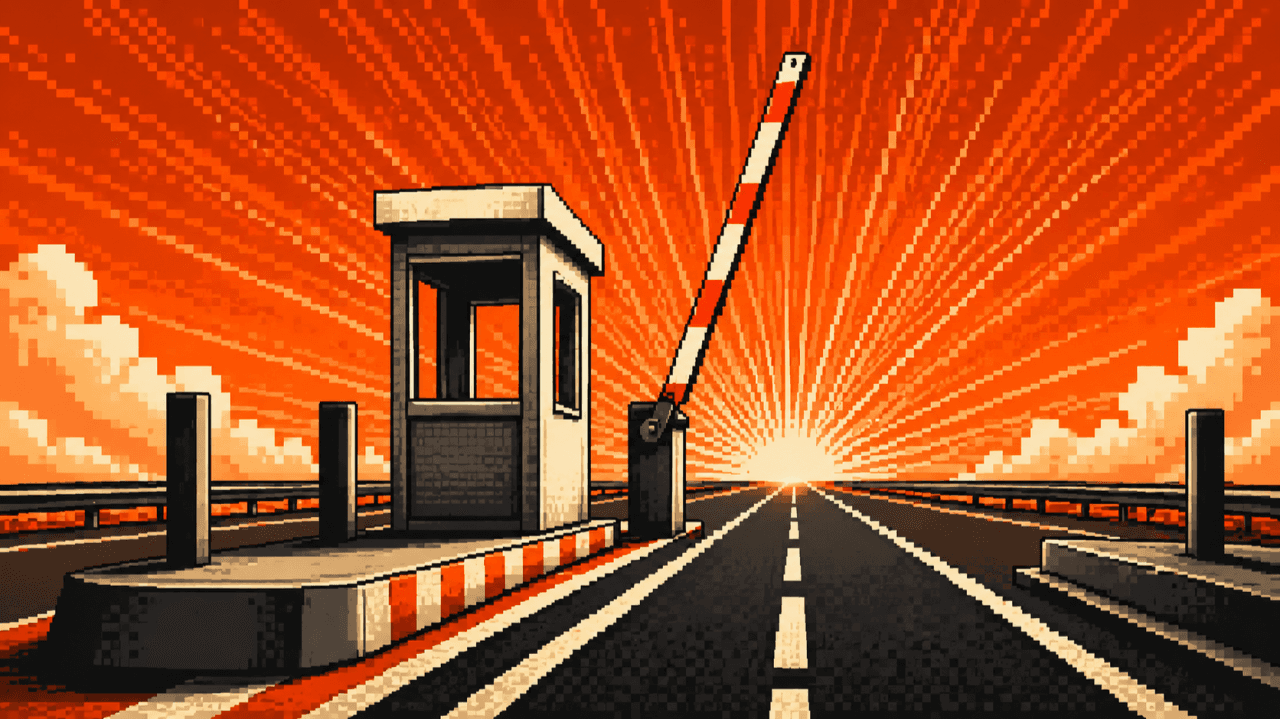
It was never the wall between a designer and a finished product. It was the toll booth. Work stopped at the edge of Figma, got written up as a spec, and got handed to someone who hadn't been in the room when the decisions were made. They rebuilt your intent off a screenshot, and some of it always died on the way.
That loss was the real cost. Being able to code was just the ticket that let you skip the line.
AI didn't hand designers a new skill. It tore the toll booth down. The designer doesn't climb up to the engineer. The work just stops needing a translator.
So if you think the superhero is the designer who learned to code, the advice writes itself: go learn React, grind the fundamentals. Which is a strange thing to chase in a year when Anthropic is openly saying Claude already writes code about as well as a midlevel engineer, while still needing senior people to design the system and catch what it gets wrong. You'd be racing toward the part of the job that just got cheap.
The part that didn't get cheap is judgment. Knowing what's worth building. Catching the output that looks right and is quietly broken in a way you won't see until it costs you. Holding the whole thing in one head with nobody to hand it to.
That was always the hard part. It only looked easy because the toll booth was loud enough to drown it out.
We bet on this at Rango since day 1, before it was obvious. Senior people only, designers and engineers both. The designers write their own code, not because the code is the skill but because it shrinks the handoff. No middle layer to coordinate through. At the time it mostly looked like stubbornness. It doesn't anymore.
So Shipper's right that something powerful is showing up. He's just got the hero backwards. It isn't the designer who climbed up to engineering. It's the one who never needed to, because the floor finally rose to meet them.

Sagar Ludhiyani
Published On
Share on
Next
