

Credits

Shreyash Chhatbar

Divyesh Vasani

Amit Pathania
Founded
2024
Location
Austin, Texas, USA
Company size
11-50
Industry
AI-powered MDM
Capabilities
Website

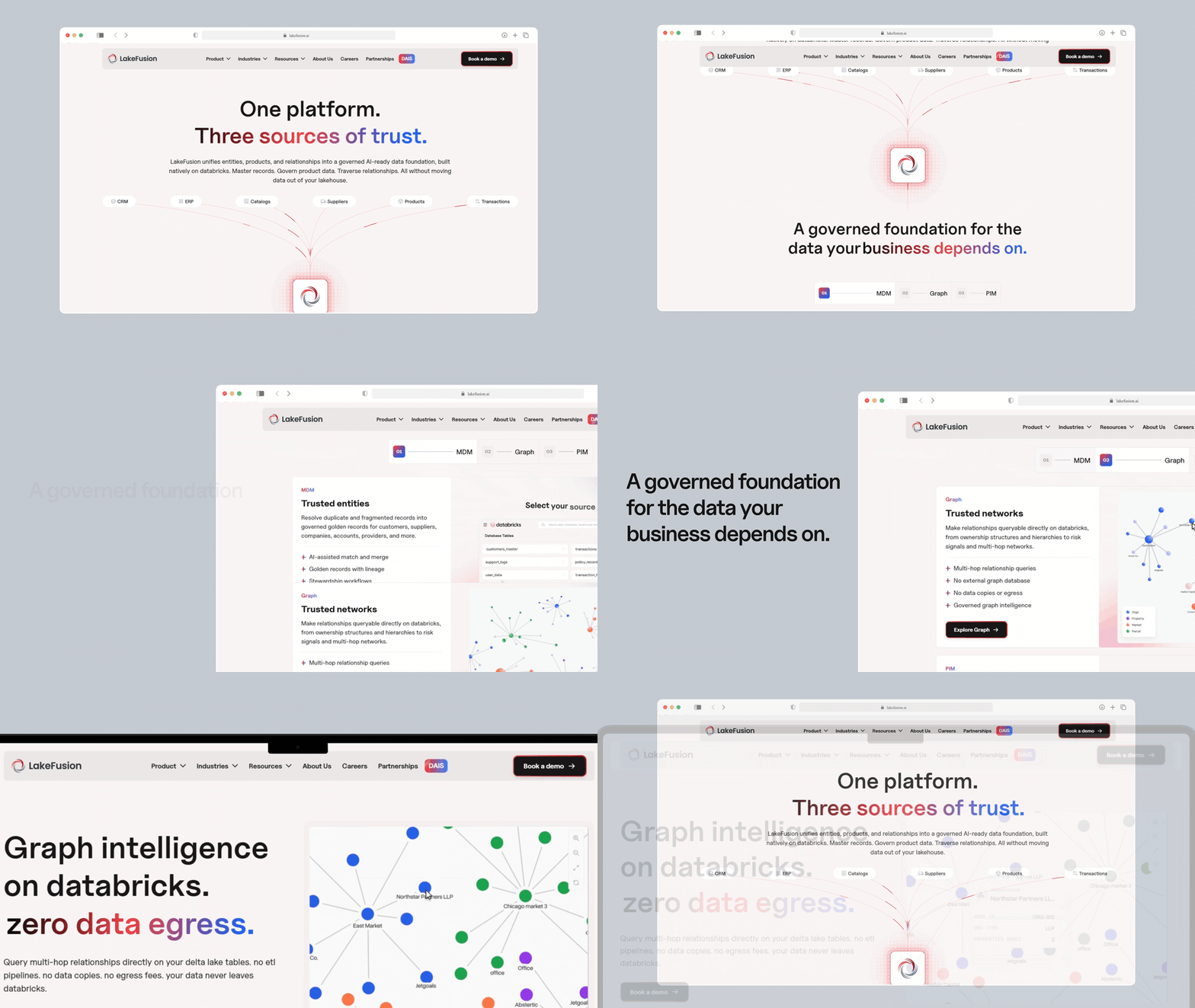
We launched LakeFusion’s Webflow website in February 2026 around one product. By May, there were three: MDM, Graph and PIM, all running natively on Databricks. We extended the existing site with a new homepage built around two questions: where does the platform fit, and why is trusted data worth paying for?
The challenge was making the value visible. A customer filed under several names. A supplier hierarchy that does not add up. AI models running on data nobody trusts. LakeFusion resolves records and connects information inside the customer’s existing Databricks lakehouse.
A 23-second tour of the new LakeFusion website.
The brief
One platform. Three sources of trust.
Three products now shared one foundation. MDM resolves entities: customers, suppliers, companies, accounts and providers. Graph makes the relationships between them queryable, from ownership structures and hierarchies to multi-hop networks. PIM governs product data across SKUs, attributes, catalogs, regions and channels. All three run natively on Databricks, and none of them moves data out of the lakehouse.
Vikas Punna, LakeFusion’s founder and CEO, puts the problem in two sentences: “Enterprises don’t have a data volume problem. They have a data trust problem.”
The new homepage had to say that to two readers at once. A data leader, who wants to know where the platform sits in the stack and what it replaces. And an executive, who wants to know why trusted data is worth paying for, before anyone explains what an entity is.
Three products, two readers, one page.
Why is master data management so hard to picture?
Most software sells by showing the screen. The most important thing MDM produces is not a screen. It is a record: one customer where there used to be several, a hierarchy that finally adds up, a report that matches the one next to it.
The category’s names do not help. MDM, PIM and graph describe the mechanism, not the result. A data architect reads them fluently. An executive approving the budget reads three technical labels.
So before the page could sell anything, it had to make the product visible.

Source systems flow into one golden record, then out to every channel that needs it.
Draw the problem first
The hero leads with the line from the brief, then draws what it means. Six labels sit in a row: CRM, ERP, Catalogs, Suppliers, Products, Transactions. A line runs from each one down into a single LakeFusion mark.
The row explains the problem before the page ever says MDM. A data leader sees their own stack in it. An executive sees why two dashboards disagree. The picture does the explaining, which leaves the headline free to make the promise.
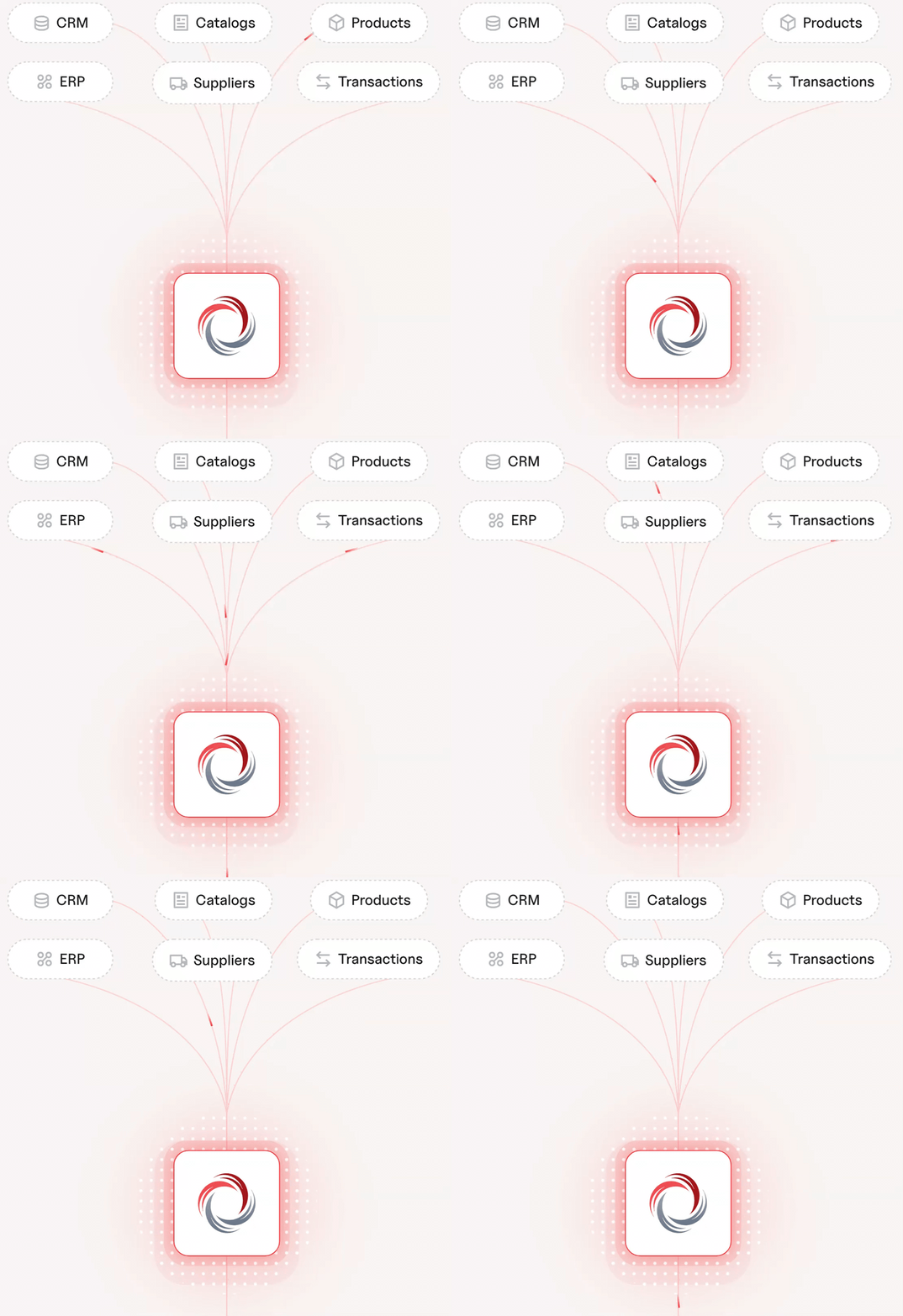
The hero drawing in motion: six systems a buyer already runs, each one feeding a single LakeFusion mark.
Three products, one platform
MDM, Graph and PIM are the category’s own names, so the page keeps them. It just never lets one stand alone. Each carries a plain headline for what it produces: trusted entities, trusted networks, trusted products.
The trust vocabulary started in the brief. Our job was to give it a structure. The three products sit in one numbered strip, 01, 02 and 03, so they read as parts of one platform rather than three separate purchases. Each card then gets specific in the reader’s own nouns. Customers, suppliers, companies, accounts and providers for MDM. Ownership structures, hierarchies and risk signals for Graph. SKUs, attributes, catalogs, regions and channels for PIM.
Trust is the word doing the work. It is what all three products produce, and it is what an executive is actually buying.

The numbered strip on the homepage: 01 MDM, 02 Graph, 03 PIM, each with a plain headline for what it produces.

MDM in the product: a potential match reviewed beside the golden record, ready to merge.

Inside LakeFusion on Databricks: selecting source tables and scanning them for duplicates, inconsistencies and data quality issues.
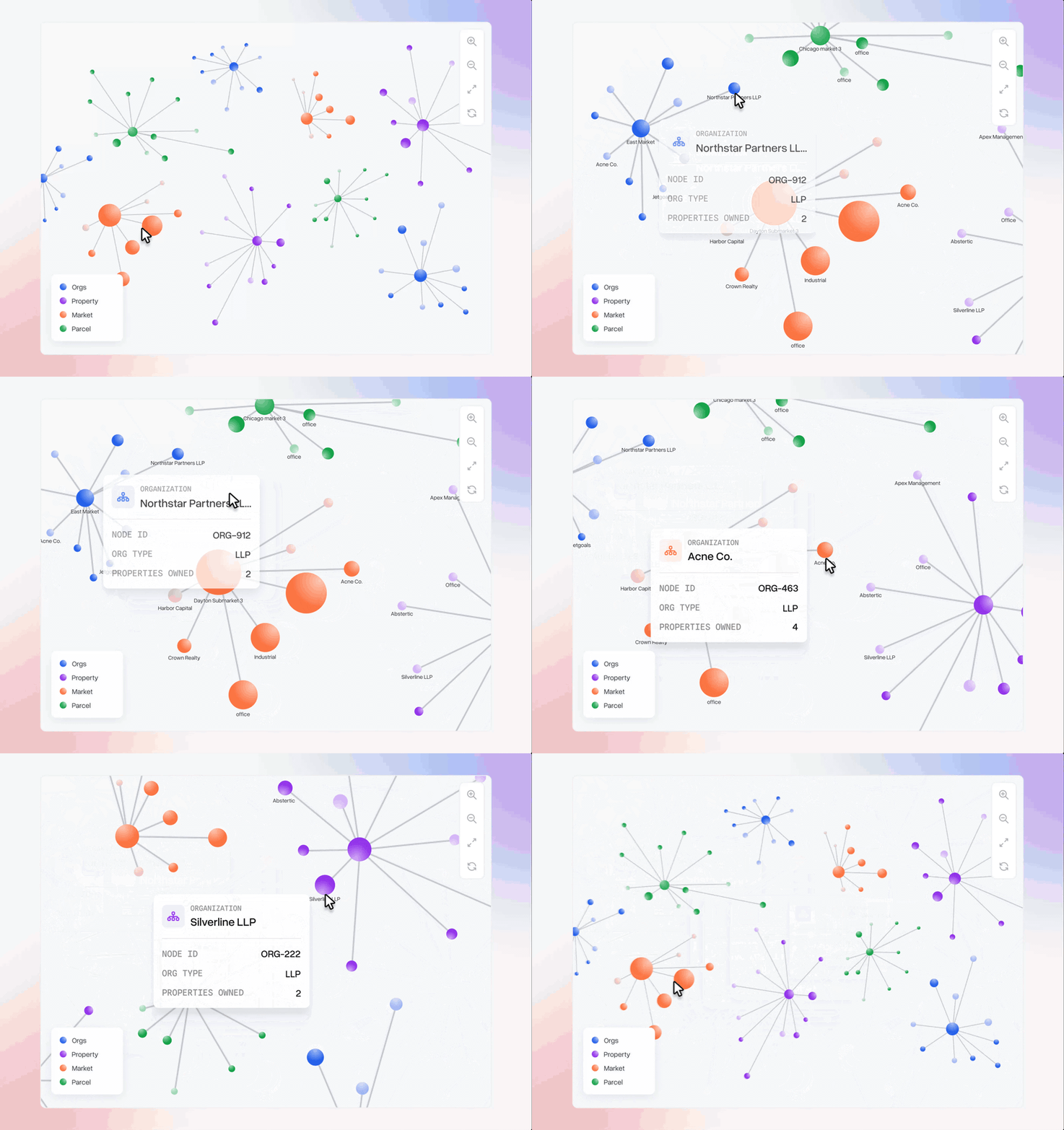
Graph in the product: organizations, properties and parcels as connected entities.

Inside the product: datasets, an AI query generator and graphs built from a plain-language prompt.
Where does it sit in the stack?
It is the first question a data leader asks about any new platform, and the homepage answers it with two drawings side by side.
The legacy approach: CRM, ERP, an MDM tool, a PIM system and a graph database, joined by dotted lines. Pipelines, copies, and a separate layer of trust.
The LakeFusion approach: one trust layer holding MDM, Graph and PIM, sitting directly on the Databricks lakehouse with Unity Catalog and Delta Lake, and feeding analytics, operations, AI and applications above it.

The two drawings on the homepage: the legacy approach beside the LakeFusion approach.
The drawings carry the claim at the center of LakeFusion’s pitch. No data movement. No separate MDM infrastructure. Everything stays in the lakehouse. An architect can check it against their own diagram in seconds. An executive can see five boxes and a tangle of lines become one layer.
Proof a buyer can check
Data infrastructure buyers have heard every adjective. What moves them is evidence they can verify, so the page leans on that.
An honorable mention in Gartner’s master data management research, for LakeFusion’s approach to AI-driven entity resolution and data mastering. The logos of Bio-Techne, HireRight and Puma. Two customer stories told in the buyer’s own terms: a global energy and manufacturing enterprise that delivered a trusted customer 360 in six weeks, and a global professional services enterprise that established a trusted company master. Those are LakeFusion’s results for its customers, not ours for LakeFusion, and the page presents them that way.
Below the proof, the page takes on the two questions that tend to stall a data purchase. Can enterprise AI depend on this data? Resolve, govern, operationalize: three verbs for what the platform does, in order. Does the data leave our environment? Security is framed as the absence of a new perimeter, not the presence of a new tool.

The results band on LakeFusion’s industry pages. The figures are LakeFusion’s own: policies unified, claims processed with reduced errors, reduction in data silos, real-time access to customer data.

Badges for LakeFusion’s partner program: Registered, Select and Strategic.
What changed
We extended the existing Webflow site from a single-product story to a homepage covering MDM, Graph and PIM. The MDM story now has its own page, with the new homepage introducing all three products under one line: One platform. Three sources of trust.

Where it started: the homepage we launched in February, built around MDM alone.

The May homepage: MDM, Graph and PIM under one line. One platform. Three sources of trust.

A custom icon set, drawn so new products and pages extend the same system.
“Thank you to [Sagar] and your team for all the hard work you put into our website!”

Common questions
What does LakeFusion do?
LakeFusion is a master data management platform built natively on Databricks. It unifies entities, products and relationships into a governed, AI-ready data foundation through three products: MDM for trusted entities, Graph for trusted networks and PIM for trusted products. Data stays in the customer’s lakehouse and is governed through Unity Catalog, and the platform is available on the Azure and AWS marketplaces.
What did Rango do for LakeFusion?
We shipped LakeFusion’s website in Webflow in February 2026, then extended it in May with a new homepage that holds all three products under one line: One platform. Three sources of trust. Shreyash Chhatbar designed the homepage and Divyesh Vasani built it in Webflow.
Why is master data management hard to explain on a website?
Because its output is a correct record, not a screen. The problem MDM solves is easy to feel: duplicate records, broken hierarchies, reports that disagree. The product itself has little to show, and the category’s names describe the mechanism rather than the result. The LakeFusion homepage handles this by drawing the problem and the architecture instead of defining the category.
What is the difference between MDM, PIM and graph?
MDM resolves entity records, PIM governs product data, and Graph makes the relationships between entities queryable. MDM turns duplicate and fragmented records about customers, suppliers and accounts into governed golden records. PIM organizes, enriches and governs product data such as SKUs, attributes and catalogs. Graph covers relationships from ownership structures and hierarchies to multi-hop networks. LakeFusion runs all three on one foundation inside Databricks.
Is the LakeFusion website built in Webflow?
Yes. We shipped the site in Webflow in February and built the new homepage in the same Webflow project in May, so the three-product story went live on the site LakeFusion already had rather than on a rebuild.
Do you work with US data and AI companies?
Yes. LakeFusion is headquartered in Austin, Texas. We work in USD, assign IP to the client, and work under MSAs and NDAs.
Share on
Next