
Updated September 2026


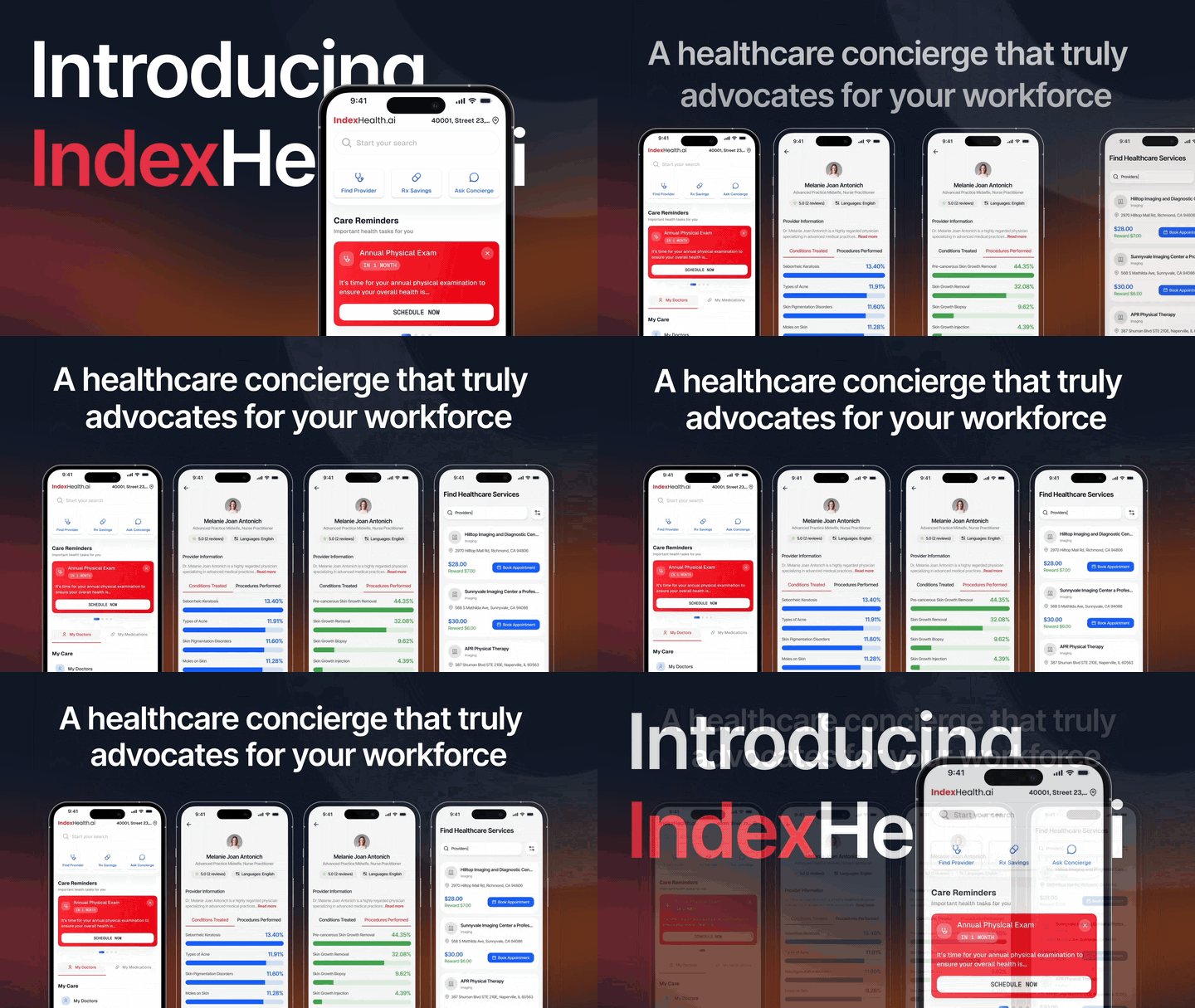





Video types


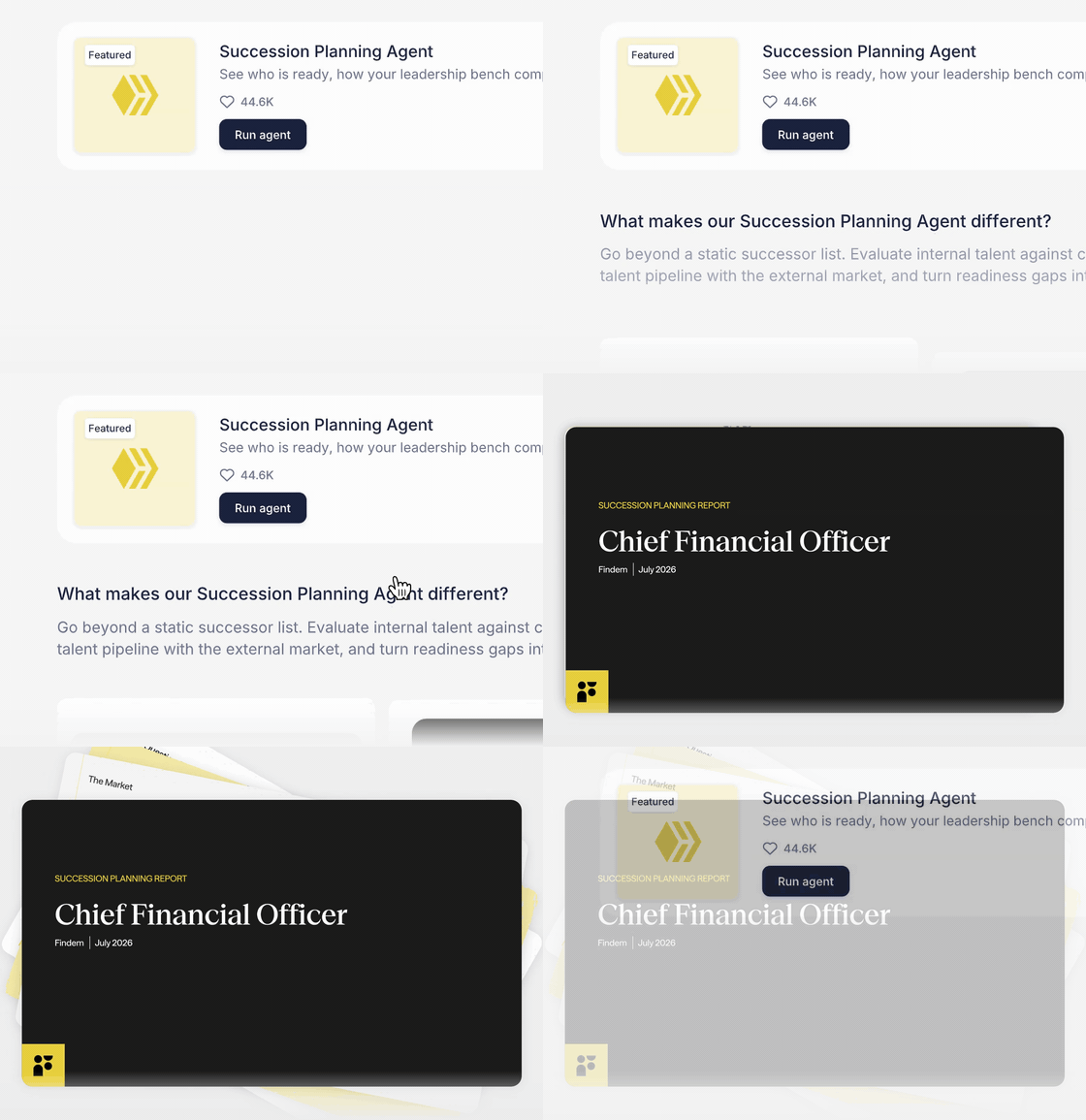
What every video includes


Script before animation
Storyboard sign-off
Styleframes in your brand
Real UI, rebuilt in vector
Captions on every cut
Voice in ElevenLabs or Magnific
16:9, 1:1, 4:5 and 9:16 exports
Music and sound effects
Source files delivered
Lottie and WebM loops
Timestamped review links
Sized for fast loading
Updated when your UI changes
Readable text on phones
Tools we use
We design every screen in Figma and Paper, animate in Jitter and After Effects, make voice and sound in ElevenLabs and Magnific, and export Lottie for the web. Need the product interface first? See web app design. Need the website around it? See B2B website design.
Figma

Paper
After Effects

Jitter

LottieFiles

Claude

ElevenLabs

Premiere
Illustrator
Photoshop

Magnific

Blender

Cinema 4D

DaVinci Resolve

Framer

Webflow



Frequently asked questions
What is a product demo video?
A product demo video shows how your product works through one real workflow, from the problem a buyer has to the result they get. Website demos usually run 60 to 120 seconds and live on the homepage, in sales emails and on demo calls.
What should a product demo video include?
A product demo video should show one buyer problem, the workflow in your real interface that solves it, the result the buyer gets, and one clear next step, such as booking a demo or starting a trial. We keep each video to one audience and one workflow, and caption it for viewers watching on mute.
What is the difference between a product demo video and an explainer video?
An explainer video explains the problem and why a solution matters, often with illustration, while a product demo video shows how your product solves it, using your real interface. Many SaaS teams use an explainer for top-of-funnel ads and a demo on the homepage and in sales follow-ups.
Should we use a product demo video or an interactive demo?
Use a product demo video to tell the story in a fixed length that works on mute in ads, social posts and sales emails, and use an interactive demo when a buyer wants to click through the product at their own pace. They work well together: the video earns the click, and the interactive demo lets serious buyers explore.
Should our demo use screen recordings or animated UI?
Screen recordings are quick and literal, but they show loading states, real data and clutter, and they break when the interface changes. Animated UI rebuilt in vector stays sharp at any size, uses clean sample data and can be updated scene by scene, which is why we rebuild the screens for most demo videos.
How long should a product demo video be?
Aim for 60 to 90 seconds on a homepage, two to three minutes for a sales walkthrough, 15 to 45 seconds for a feature release clip, and 15 seconds or less for paid social ads. We cut one master into each length, so every channel gets the version it needs.
How long does it take to make a product demo video?
Most product demo and launch videos take three to six weeks, depending on length, how many screens we rebuild and how settled the message is. Short release clips take days once the screens are final.
What affects the cost of a product demo video?
Length, the number of scenes and screens we rebuild, custom illustration or 3D, voiceover and languages, and how many cuts you need. We agree the scope before any animation starts, and any change to it is agreed with you before we make it.
Can you make a demo video before our product is built?
Yes. We animate from your Figma designs, so a launch or demo video can be ready for launch day, as long as the designs are final. If we designed the product, the screens are already in our files.
What do we need to provide?
A demo or sandbox account, or your Figma files, one lead from product or marketing for the script, and your brand assets. We handle the script, storyboard, animation, voice, music and every export, with a review link at each stage.
Do you use Jitter or After Effects?
Both. Jitter, including its AI features, for UI motion, release clips and fast social versions. After Effects for launch films with camera moves, 3D and compositing. Many videos use both, and a designer reviews every frame.
Will the video go out of date when our UI changes?
Not for long. You get the source files, and because the screens we rebuild are editable layers, we update only the scenes that changed instead of starting over.
Can a US company work smoothly with a remote team?
Yes. Rango is remote-first, and our process is built so it feels like a team sitting next to you. We agree overlap hours with your US workday before work starts, share progress in your Slack and project board as the work happens, and keep every file and decision open to you, so feedback turns around in hours, not overnight. Contracts are in USD, IP in the work we create is assigned to you, and MSAs and NDAs follow US terms. The designers and animators on your video stay on it from script to final cut.