
Sagar Ludhiyani on ten years of work and founding Rango.

Sagar Ludhiyani is the founder of Rango, a design and engineering company based in Indore, India. He started it in 2024, in the eighth year of his career, after walking away from what he has called the best job he had ever had.
Rango designs and builds products, websites and front-ends, mostly for fintech, data and AI companies in India and the United States. It is bootstrapped. The about page lists seven people, all mid-to-senior, all full-time, all in-house.
In September 2026 he marked ten years of work the way a designer would, by going back through old photographs and writing one line under each. What follows is that account, one photograph at a time, with his own words kept intact and the dates and numbers attached.
“Ten years, and not one turn was planned.”
The short version
Who he is, when he started, and what Rango is now.
Who. Sagar Ludhiyani, founder of Rango, based in Indore, Madhya Pradesh, India.
Founded. 2024, in the eighth year of his career, after leaving what he calls the best job he had ever had.
Funding. Bootstrapped. No outside investment, then or since.
Team. Seven people, all mid-to-senior, all full-time, all in-house. No interns, no outsourcing, no middle layer.
Work. Product design, websites and front-end engineering for fintech, data and AI companies in India and the United States.
Career started. September 2016, at seventeen, after dropping out of chartered accountancy and failing the National Institute of Design entrance exam. A friend referred him anyway.
01. It started in September 2016, at seventeen
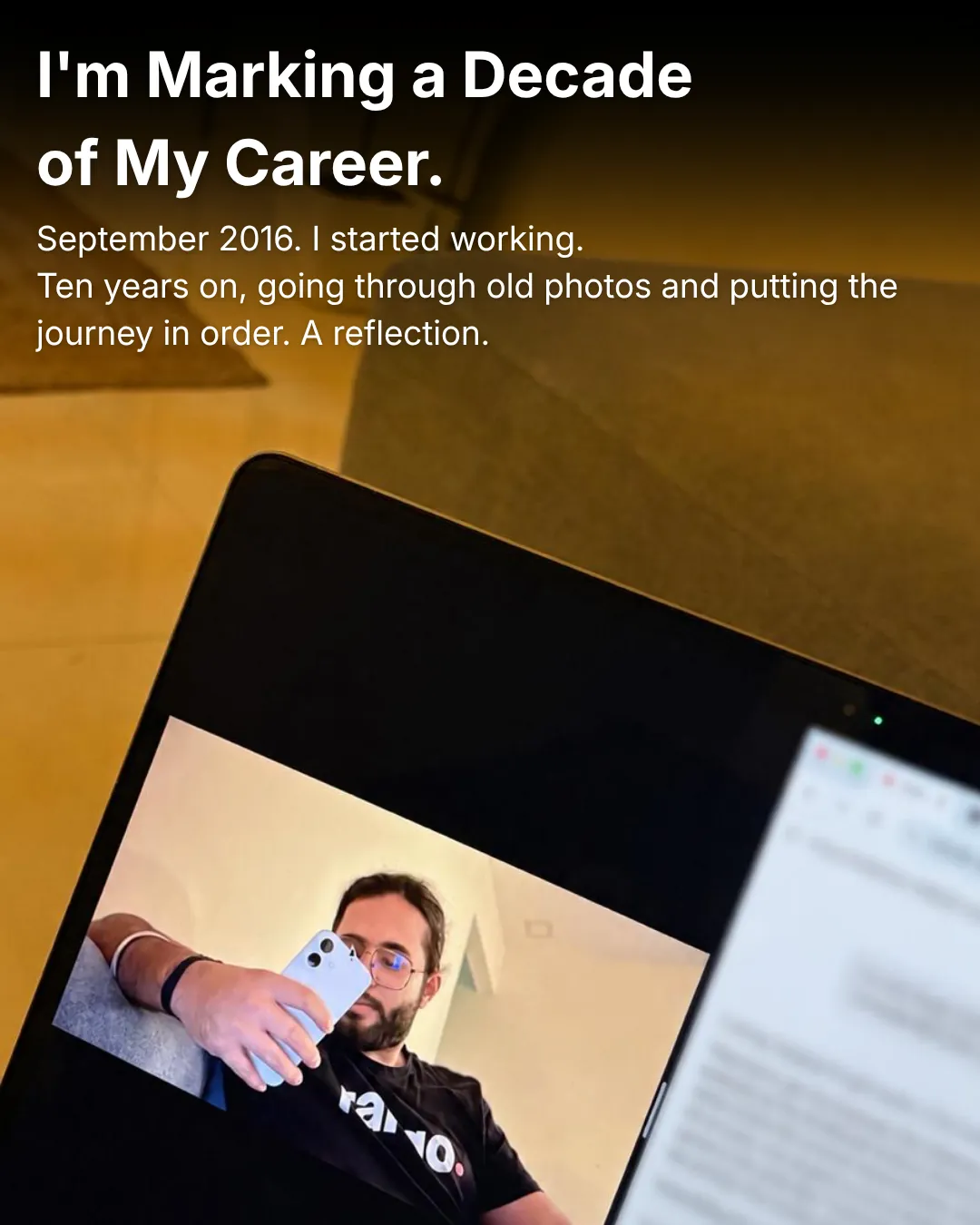
Ten years on, going back through old photos. Image: Sagar Ludhiyani.
He was seventeen and had just closed two doors behind him. He had dropped out of CA, the chartered accountancy track a lot of Indian families still treat as the safe road, and he had failed the entrance exam for the National Institute of Design, the best known design school in the country. Neither outcome left him with a credential anyone was looking for.
A friend referred him for a job anyway, and that is how he got in. He is blunt about how it looked at the time.
“On paper, a failure. Someone vouched for me anyway. That’s the only reason any of this started.”
02. The first office wall said WORKING ALONE SUCKS
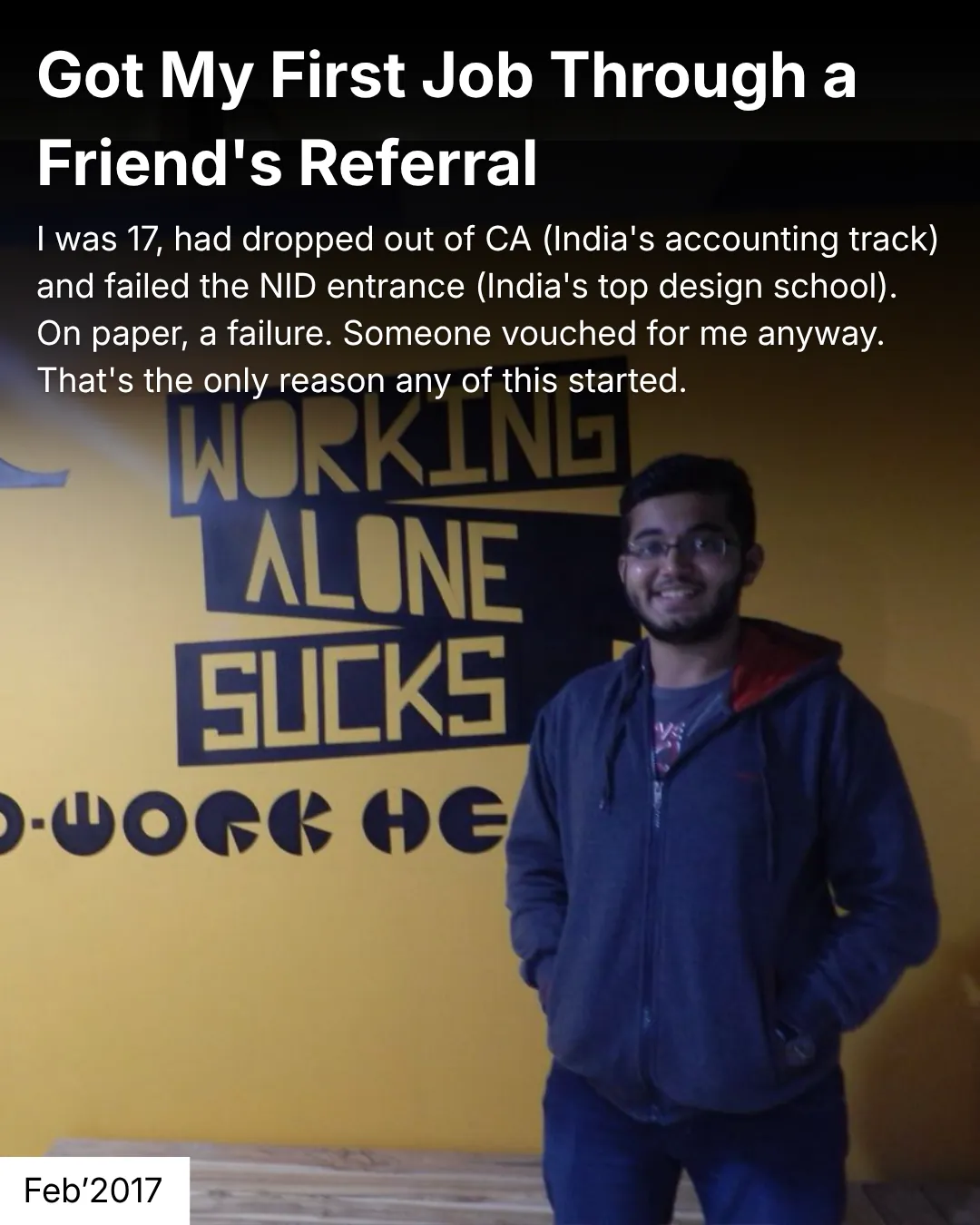
The first job, February 2017. Image: Sagar Ludhiyani.
The photograph from that first office is dated February 2017. Painted on the yellow wall behind him are the words WORKING ALONE SUCKS. It was somebody else’s slogan for a co-working space, not his, and he had nothing to do with putting it there.
It has turned out to be the argument he has been making ever since. Everyone at Rango is mid-to-senior and full-time. There are no interns and no outsourcing. There is no middle layer either, nobody sitting between the work and the person doing it, which is the reason he gives for how quickly a team that size can move.
03. The job that funded the craft had nothing to do with it
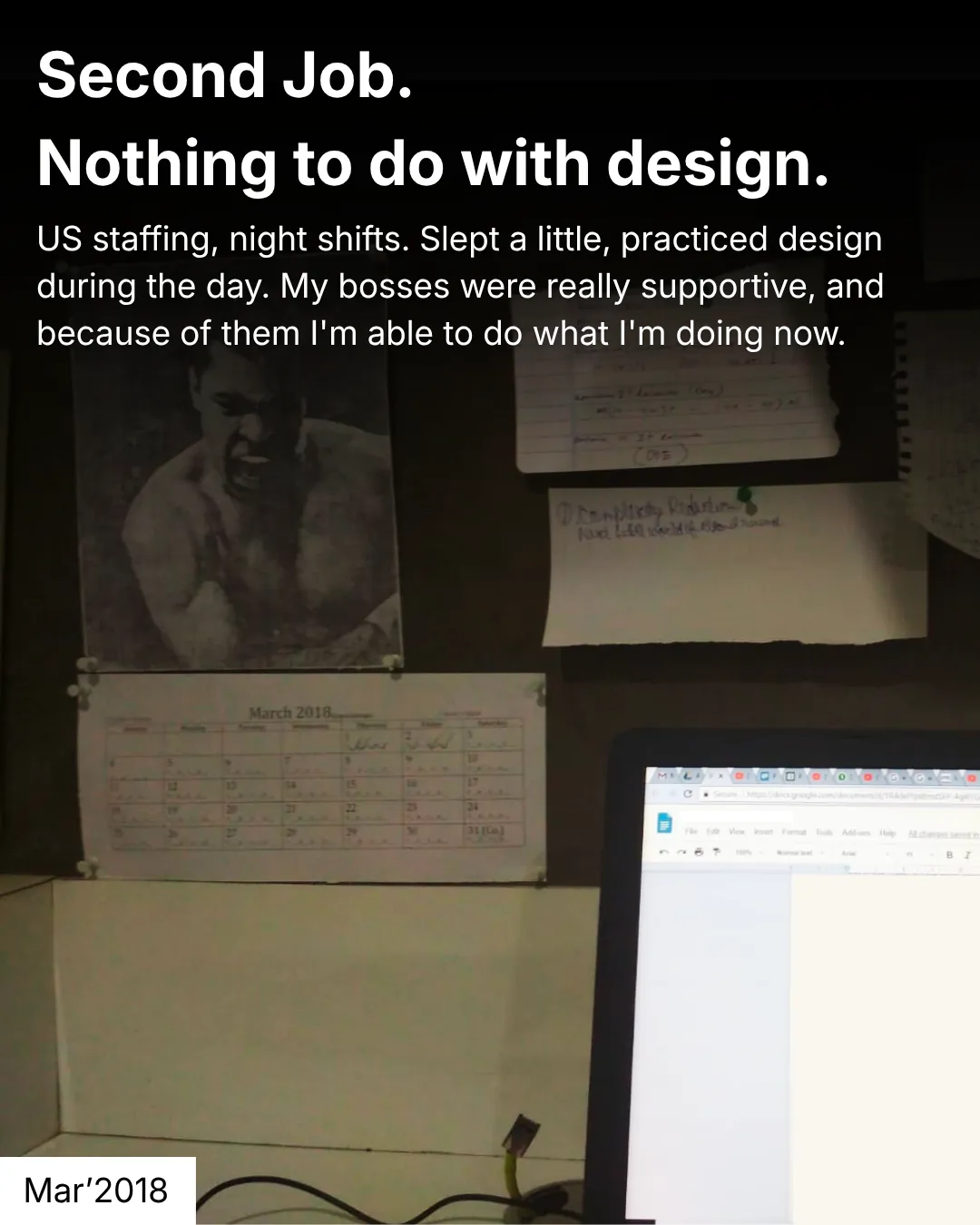
The second job, March 2018. Image: Sagar Ludhiyani.
Next came US staffing on night shifts. The work paid, and it had nothing to do with design. Design happened in the daylight hours he should have been asleep.
“Slept a little, practiced design during the day”, he wrote under a photograph dated March 2018, of a desk with a paper calendar and a picture of Muhammad Ali pinned above it. The credit in that line does not go to himself.
“My bosses were really supportive, and because of them I’m able to do what I’m doing now.”
04. Freelance kept him busy enough to stay stuck
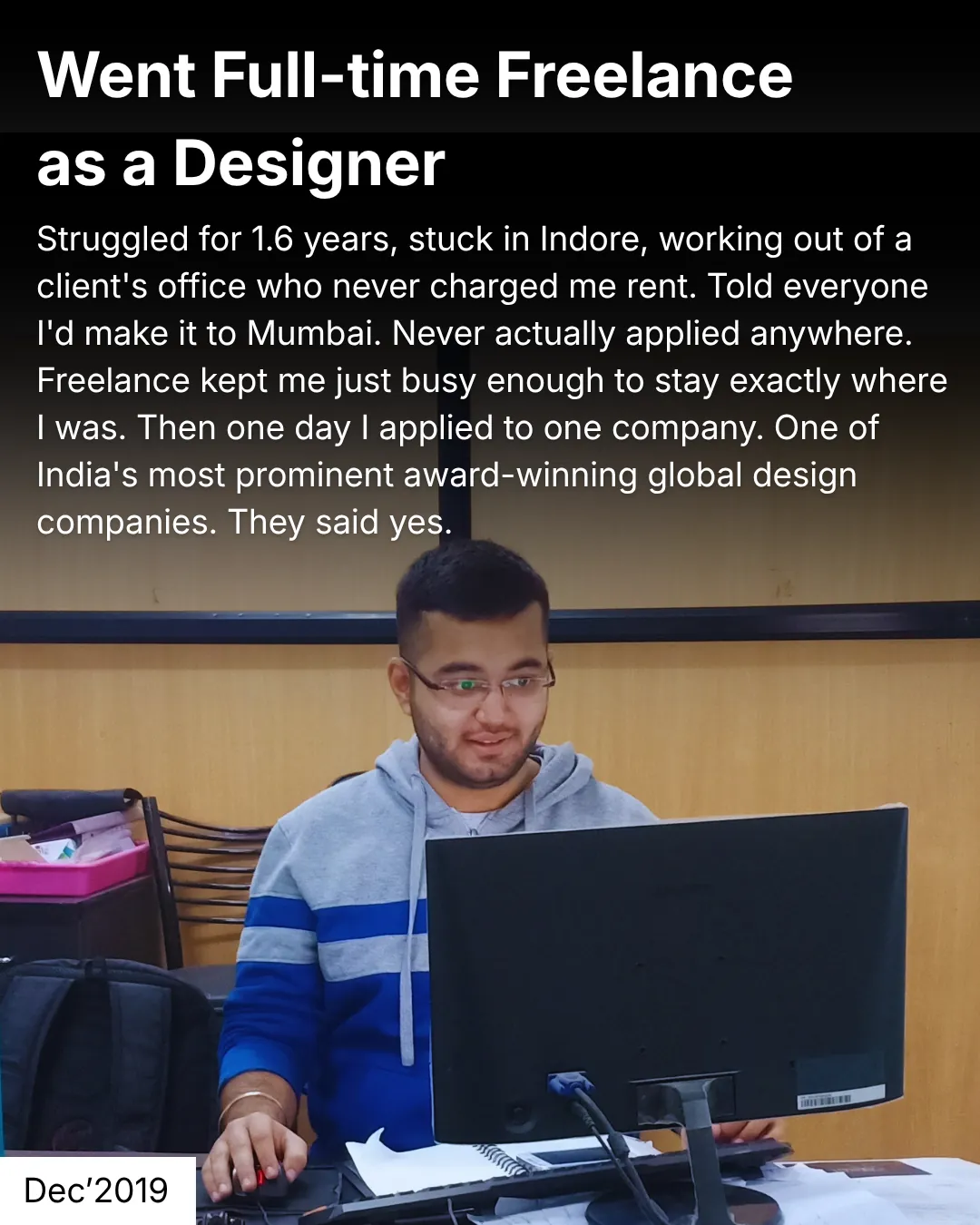
Full-time freelance, December 2019. Image: Sagar Ludhiyani.
Then he went full-time freelance from Indore, and stalled. This is the passage most founder profiles leave out, so it is worth reading whole rather than summarised.
“Struggled for 1.6 years, stuck in Indore, working out of a client’s office who never charged me rent. Told everyone I’d make it to Mumbai. Never actually applied anywhere. Freelance kept me just busy enough to stay exactly where I was.”
The distinction he draws there is the useful one. He was not idle and he was not short of work. He was busy, and busy is not the same as moving.
05. One application, once, and the room changed
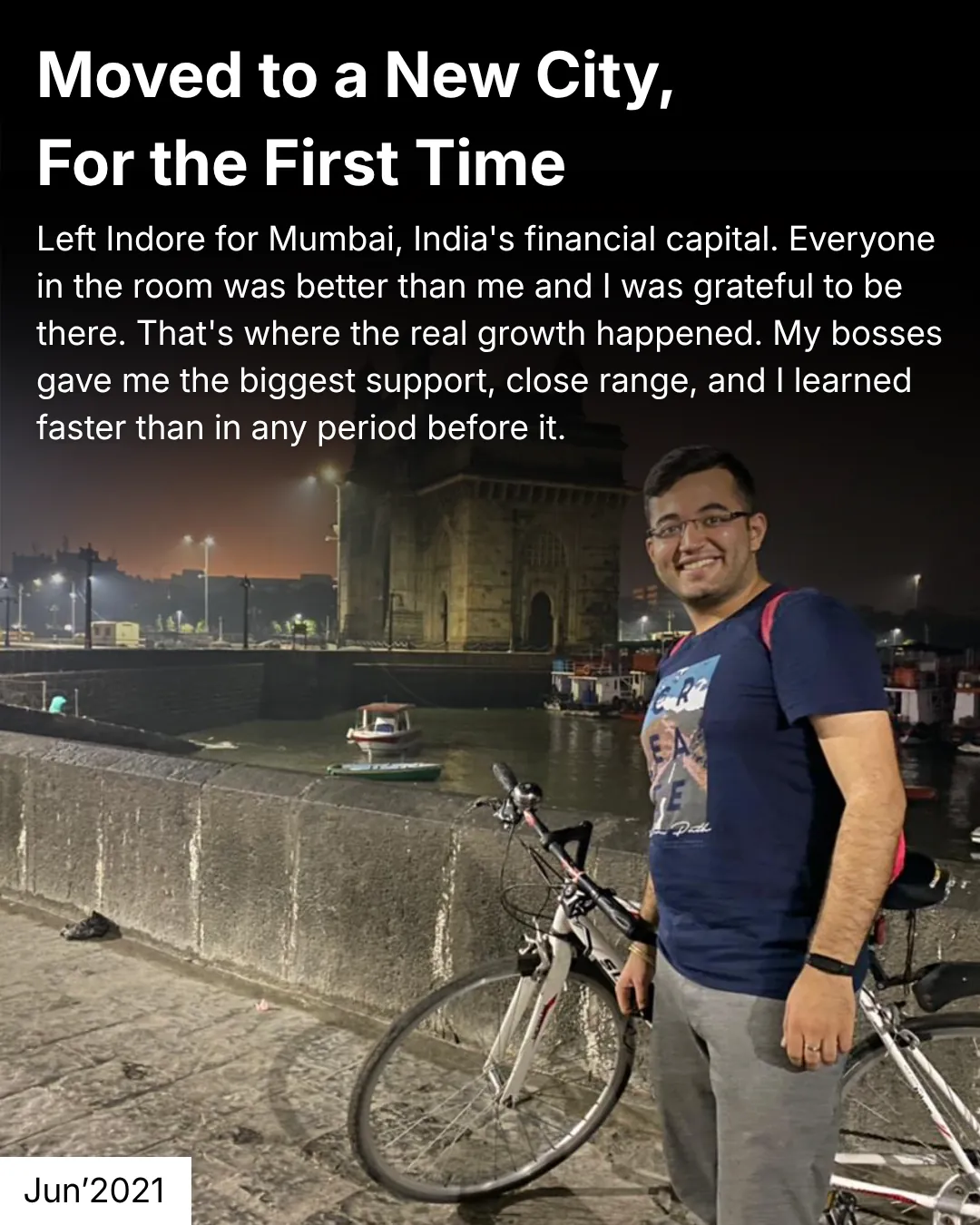
Mumbai, June 2021. Image: Sagar Ludhiyani.
Then he applied to one company, once. In his description it was “one of India’s most prominent award-winning global design companies”. They said yes. He moved to Mumbai in June 2021, the first time he had lived anywhere other than Indore.
His summary of what happened there is not the one you normally hear from a founder.
“Everyone in the room was better than me and I was grateful to be there. That’s where the real growth happened. My bosses gave me the biggest support, close range, and I learned faster than in any period before it.”
06. He left at the top, which is the part that cost him
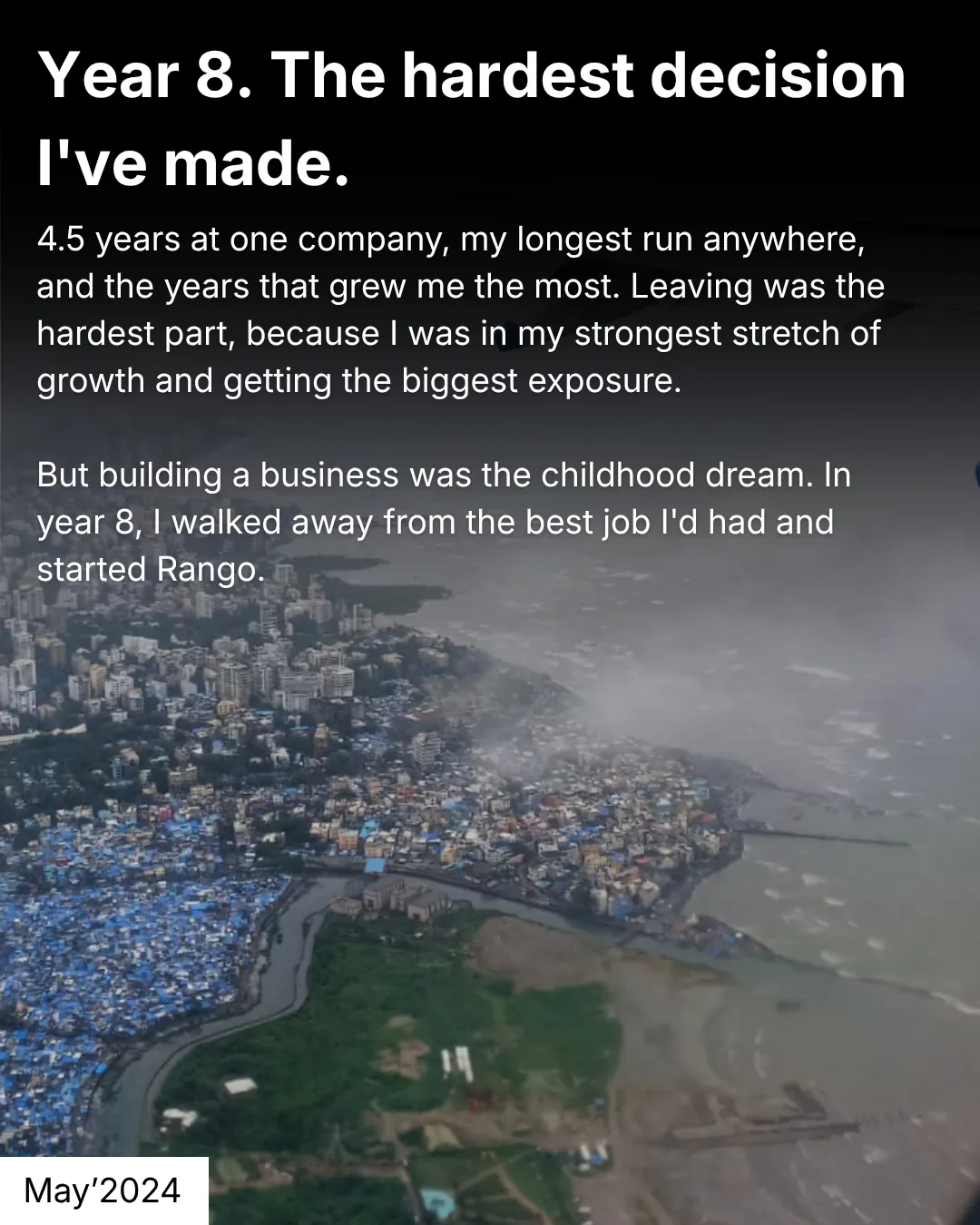
Leaving the best job he had, May 2024. Image: Sagar Ludhiyani.
He stayed four and a half years, his longest run anywhere, and left in May 2024 while the work was still going well. That is the part he calls hardest, and the reasoning is worth reading twice, because leaving at the top is the opposite of what most people do.
“Leaving was the hardest part, because I was in my strongest stretch of growth and getting the biggest exposure. But building a business was the childhood dream. In year 8, I walked away from the best job I’d had and started Rango.”
07. Two years in: seven people, no outside money
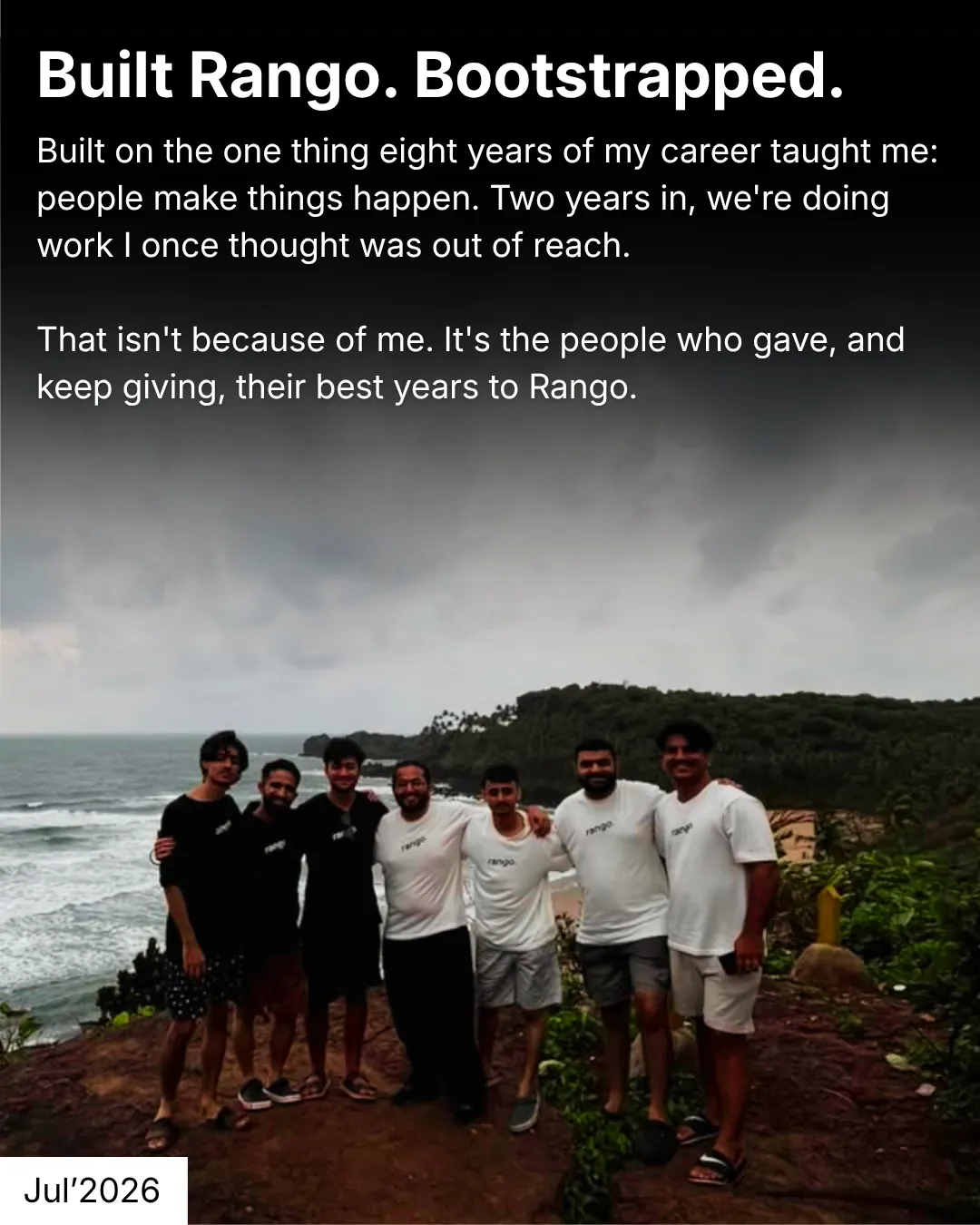
The Rango team, July 2026. Image: Sagar Ludhiyani.
Rango was founded in 2024 and is registered in Indore, Madhya Pradesh. It has taken no outside money. It has been a Webflow Certified Partner since March 2026, and its Webflow profile lists more than ten client sites. It keeps a Framer profile and a YouTube channel of website walkthroughs.
The work tends to be for companies whose product is genuinely complicated rather than simply new. CodiFi runs seven products and 3.7 million orders a day. Symbo processes more than seven million insurance policies a month. Frisco Analytics needed twenty pages built in two weeks.
Ask him what made that possible and he does not talk about design.
“Built on the one thing eight years of my career taught me: people make things happen. That isn’t because of me. It’s the people who gave, and keep giving, their best years to Rango.”
There is a test of that claim, and it is a recent one. In August 2026 he disappeared from work twice with no notice, both times for a family emergency. No handover, no briefing. He wrote it up afterwards without much varnish, cost included: about eight percent of client work in motion slipped, and he cleared it in his first week back. What stopped completely was everything with no client attached, the content, the internal website work, and the growth plans that existed nowhere outside his head.
“Delivery barely needs me anymore, and I’m proud of that. Direction still entirely does.”
08. He credits the arc to other people, and names them
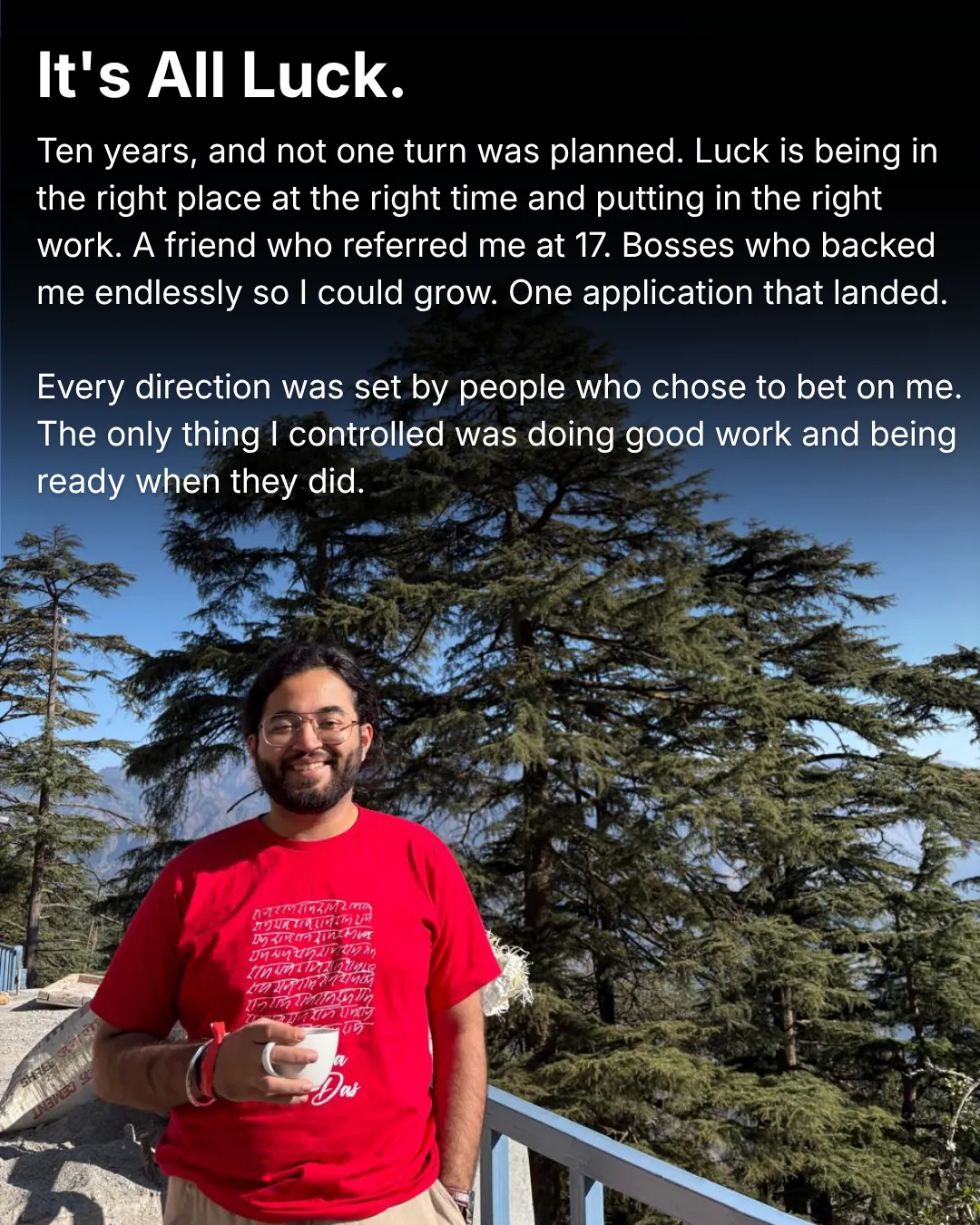
It is all luck. Image: Sagar Ludhiyani.
Ten years in, asked to explain the arc, he does not claim it. What is unusual is how specific the explanation is. It is not a vague feeling of good fortune; it names three people and events.
“Luck is being in the right place at the right time and putting in the right work. A friend who referred me at 17. Bosses who backed me endlessly so I could grow. One application that landed.”
“Every direction was set by people who chose to bet on me. The only thing I controlled was doing good work and being ready when they did.”
09. Ten years in, he says he is one percent done
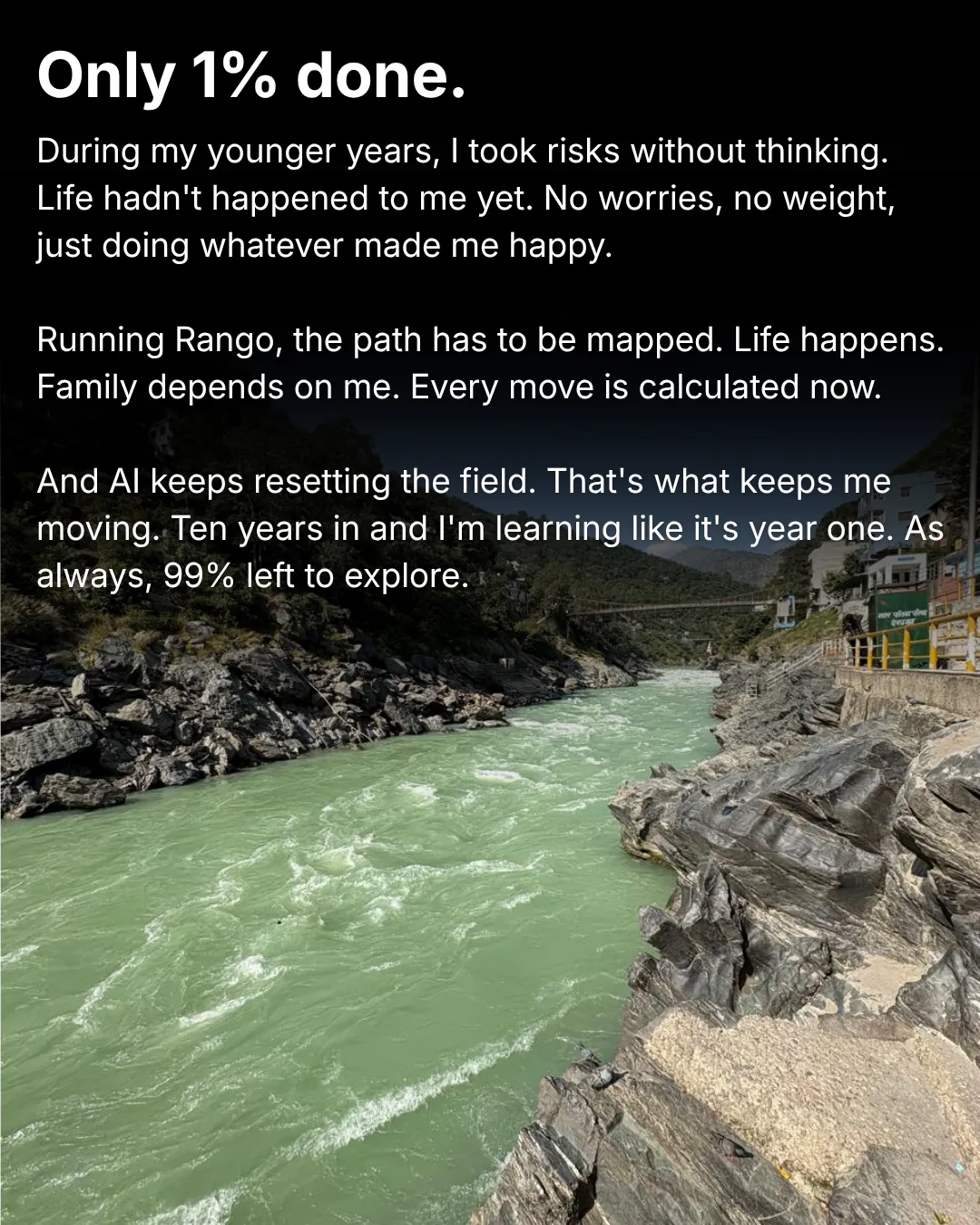
Only one percent done. Image: Sagar Ludhiyani.
The last photograph carries the least comfortable line. “During my younger years, I took risks without thinking. Life hadn’t happened to me yet.” Running a company changed the arithmetic. “Life happens. Family depends on me. Every move is calculated now.”
What has not changed is how much he thinks is left.
“And AI keeps resetting the field. That’s what keeps me moving. Ten years in and I’m learning like it’s year one. As always, 99% left to explore.”
It is the same case he makes about the craft, that AI closes the distance between design and engineering and puts the weight back on judgment.
The ten years, in order
The same account as above, compressed to its dates.
September 2016. First job at seventeen, through a friend’s referral, after dropping out of CA and failing the NID entrance exam.
February 2017. The first office, with WORKING ALONE SUCKS painted on the wall behind the desk.
March 2018. A second job in US staffing on night shifts, with design practised in the daylight hours he should have been asleep.
December 2019. Went full-time freelance from Indore.
2020 to 2021. One point six years stalled, working out of a client’s office that never charged him rent. Then one application, to one company, which said yes.
June 2021. Moved to Mumbai, the first time he had lived anywhere other than Indore.
May 2024. Left after four and a half years, his longest run anywhere, while the work was still going well.
2024. Founded Rango in Indore. Bootstrapped from the start.
March 2026. Rango becomes a Webflow Certified Partner.
August 2026. Away twice with no notice. Delivery ran without him, and about eight percent of client work in motion slipped.
September 2026. Ten years of work, marked with nine photographs and one line under each.
Common questions
Who is the founder of Rango?
Sagar Ludhiyani. He founded Rango in 2024 and leads design and direction. He is based in Indore, India.
When was Rango founded?
2024. He left his previous job in May 2024, and the team marked Rango’s second year in 2026.
Where is Rango based?
Indore, Madhya Pradesh, India, at 919, 9th Floor, Shekhar Central, 452001. It works with clients across India and the United States.
Has Rango raised outside investment?
No. It is bootstrapped, and has been since 2024.
What did Sagar Ludhiyani do before Rango?
His first job came at seventeen, through a friend’s referral, in September 2016. He then worked nights in US staffing while practising design by day, went freelance from Indore in December 2019, and joined a large Indian design company in Mumbai in June 2021, where he stayed four and a half years.
Where can you find him and the company?
Sagar is on LinkedIn. Rango is on LinkedIn, X, YouTube, Webflow and Framer.
If you are weighing up a design and engineering partner, Sagar takes the first call himself and stays on the project. Tell us what you are building.
The photographs and every quotation in this piece come from Sagar’s own ten-year post on LinkedIn.

Sagar Ludhiyani
Published On
Share on